How Travel Data Scraping Helps OTAs, Airlines, and Hotels Compete
Category
Hotel & Travel
Publish Date
Oct 06, 2026
Author
Scraping Intelligence
Travel prices change by the hour. A fare that looked competitive in the morning can be undercut by lunch, and hotel rates may shift several times a day with demand. For online travel agencies (OTAs), airlines, hotels, and tour operators, tracking these changes by hand isn't realistic.
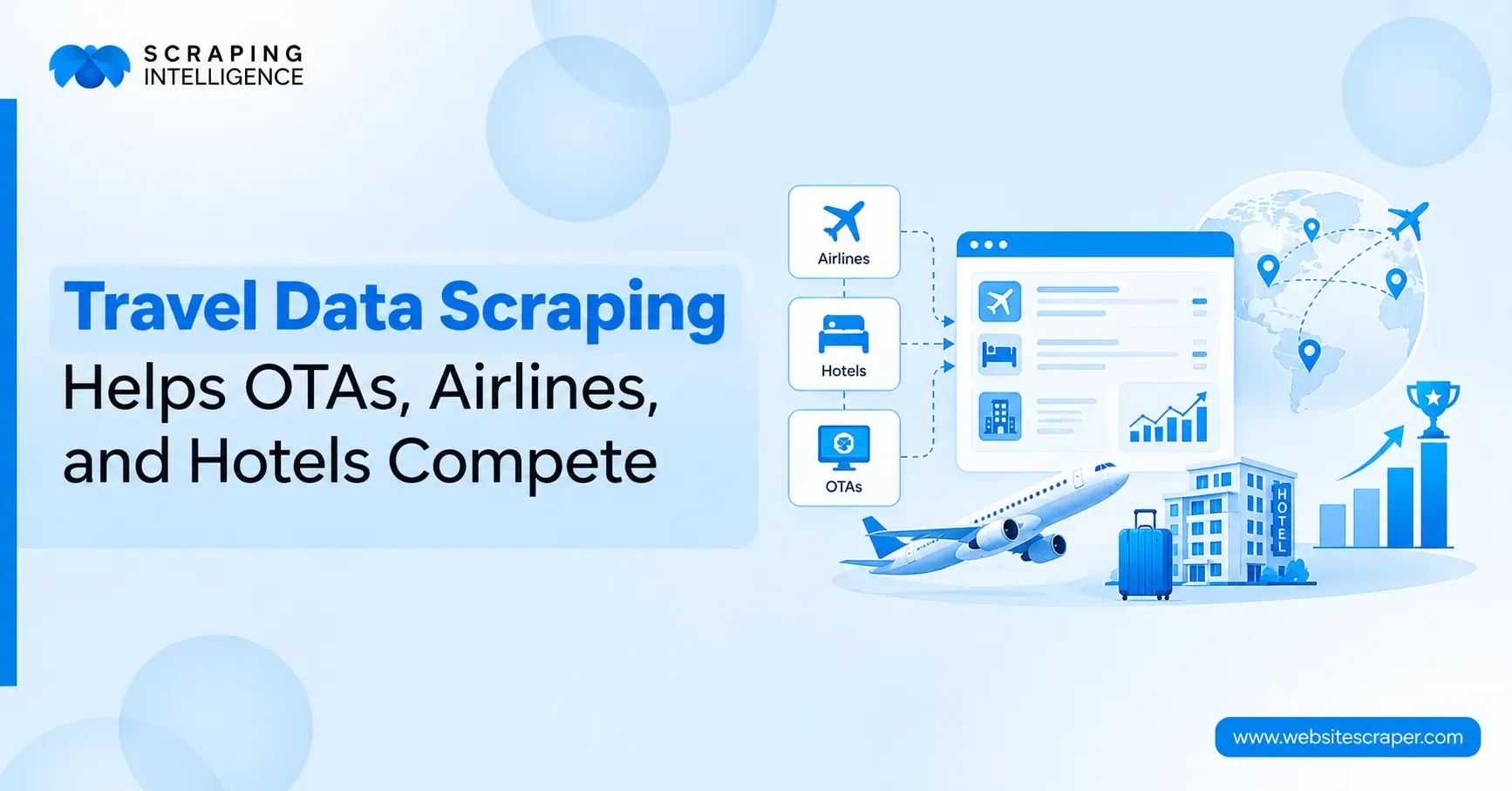
That's where travel data scraping comes in. It automates the collection of public travel information, such as fares, room rates, availability, and reviews, so teams can make pricing and planning decisions based on current data instead of guesswork.
This guide covers what it is, which data you can collect, how the process works, and how to decide whether to build your own scraper or work with a data provider.
What Is Travel Data Scraping?
Travel data scraping is the automated extraction of publicly available information from travel websites and apps, including airline sites, OTAs, hotel booking platforms, and review sites. A scraper visits pages, reads the content, and saves selected fields (price, dates, route, room type, rating) in a structured format like CSV, JSON, or a database.
The main difference from manual research is scale and freshness. An analyst might check a few dozen fares a day. A well-built scraper can monitor thousands of routes or properties on a schedule and flag changes as they happen. Scattered web pages become a dataset you can sort, compare, and feed into pricing or business intelligence tools.
Types of Travel Data You Can Scrape
Most travel businesses focus on a handful of data categories. The right mix depends on what you sell and who you compete with.
Data type
Common fields
Typical use
Flights
Airline, route, departure and arrival times, fare class, price, baggage fees
Aggregators and OTAs depend on broad, current inventory data. Their value to travelers is showing the best options from many suppliers in one place, so stale or missing prices cost them bookings directly.
Common use cases include:
Price comparison feeds: Collecting fares and room rates from suppliers that don't offer an API, or filling gaps in API coverage.
Rate parity monitoring: Checking whether hotels or airlines offer lower prices on other channels than the rates agreed with you.
Inventory gap analysis: Spotting destinations, properties, or routes that competitors list and you don't.
Search visibility tracking: Seeing where competitors appear on metasearch platforms for key routes and cities.
Smaller travel agencies can use the same approach on a narrower scope, such as tracking a few competitors' package prices for their core destinations.
Mobile Travel App Data Extraction
A large share of travel shopping now happens in mobile apps, and app prices don't always match the website. Some airlines and OTAs run app-only deals or show different availability to mobile users.
Mobile travel data extraction captures that information, usually by running the app on emulated devices and recording what users see. It's more technical than standard web scraping, because apps update often, rely on login sessions, and limit how frequently data can be requested. For businesses that compete on price, though, ignoring mobile channels leaves a gap in the market picture.
Key Benefits for Travel Businesses
Scraped travel data is only as valuable as the decisions it supports. These four areas see the most impact.
Competitive Price Comparison
Pricing is the most common reason travel companies collect web data. Monitoring competitor fares and room rates by date, route, and room type lets revenue teams react quickly, matching prices where needed and holding firm where they already lead. Historical price data also shows how competitors respond to demand, holidays, and events.
Market Share Analysis
Tracking which airlines serve which routes, how many properties are listed in a destination, or how often a competitor appears in search results gives you a practical view of market share. It helps answer questions like where demand is growing and which segments are underserved.
Data-Driven Marketing Strategies
Reviews show what travelers value and what frustrates them. Sentiment analysis across thousands of reviews can surface recurring themes, such as cleanliness, check-in delays, or hidden fees, that shape ad messaging, landing pages, and service fixes. Competitor promotions and package offers add further campaign ideas.
Hotel Occupancy and Demand Forecasting
Availability calendars and rate changes act as demand signals. When nearby hotels sell out or raise prices for certain dates, that usually points to an event or seasonal spike. Combined with your own booking history, this data improves occupancy forecasts and helps you set rates ahead of demand instead of after it.
How Travel Data Scraping Works
Most projects follow the same five steps, whether you build in-house or work with a provider.
Define the data and sources. List the sites, routes, destinations, travel dates, and fields you need, plus how often the data should refresh.
Build or configure the scraper. Python libraries like Requests and BeautifulSoup handle simple pages. JavaScript-heavy booking sites usually need a headless browser such as Playwright or Selenium.
Handle dynamic content and scale. Travel sites load prices after a search, vary results by location and currency, and limit request rates. Scrapers need to manage sessions, pacing, and retries responsibly.
Clean and structure the data. Standardize currencies, date formats, and airport or city codes, and remove duplicates so records are comparable across sources.
Deliver and maintain. Export to CSV, Excel, JSON, a database, or an API feed, and monitor for site changes, which can break a scraper overnight.
Once you know what data you need, the next decision is whether to build a scraper or use a managed data extraction service.
Factor
Build in-house
Use a data provider
Upfront cost
Developer time and infrastructure
Subscription or per-project fee
Time to first data
Weeks to months
Often days
Maintenance
Your team fixes breakages
Provider handles site changes
Control
Full control over logic and schedule
Defined by the service agreement
Best for
Narrow, stable needs with in-house engineers
Many sources, frequent updates, or limited developer time
Many teams start with a provider to prove the data's value, then decide whether bringing the work in-house makes sense.
Is Scraping Travel Data Legal?
Collecting publicly available data is often lawful in the US, but the details matter. Courts have weighed whether the data was public, how it was accessed, and whether a site's terms were breached. To stay on safe ground:
Collect only publicly accessible data, and never bypass logins, paywalls, or technical access controls.
Review each site's terms of service and robots.txt file.
Avoid personal data such as traveler names or contact details, which brings obligations under privacy laws like the CCPA and GDPR.
Keep request rates low enough that you don't disrupt the site.
This is general information, not legal advice. Check with legal counsel before starting a large-scale project.
Final Thoughts
In a market where prices and availability change constantly, current data is a competitive advantage. Travel data scraping gives OTAs, airlines, hotels, and agencies a clear view of competitor pricing, demand, and customer sentiment.
Need travel data without managing scrapers yourself? Our team builds custom travel data extraction solutions for flights, hotels, rentals, and reviews, delivered in the format your team already uses. Contact us to discuss your requirements.
It depends on the use case. Fare and room-rate monitoring often needs daily or hourly updates, while review and market-share analysis can run weekly or monthly.
Can I scrape data from airline and hotel websites?+
Often yes, if the data is public and you follow the site's terms and applicable laws. Some suppliers also offer official APIs, which are worth checking first.
What format is scraped travel data delivered in?+
Common formats include CSV, Excel, JSON, and XML, or direct delivery to a database or API.
Should I build a scraper or hire a provider?+
Build if your needs are narrow and you have engineers to maintain it. Use a provider if you need many sources, frequent updates, or fast results.
Let's Talk About Your Data Needs
Tell us what data you need, and we'll help you find the right solution.
Scraping Intelligence Editorial Team is a collective of data specialists, analysts, and researchers with expertise in web scraping, data extraction, and market intelligence. The team produces well-researched guides, actionable insights, and industry-focused resources that help businesses unlock the value of data and make informed, strategic decisions.
Latest Blog
Explore our latest content pieces for every industry and audience seeking information about data scraping and advanced tools.
Explore ethical web scraping for enterprises, covering data sourcing, privacy laws, compliance risks, and strategies for responsible data collection at scale.
Looking for a web scraping company? Compare 10 top providers, from managed data services to APIs and no-code tools, by pricing, features, and scalability.
Explore Property Finder data scraping to collect UAE property prices, listings, locations, and rental trends for smarter market research and investment analysis.