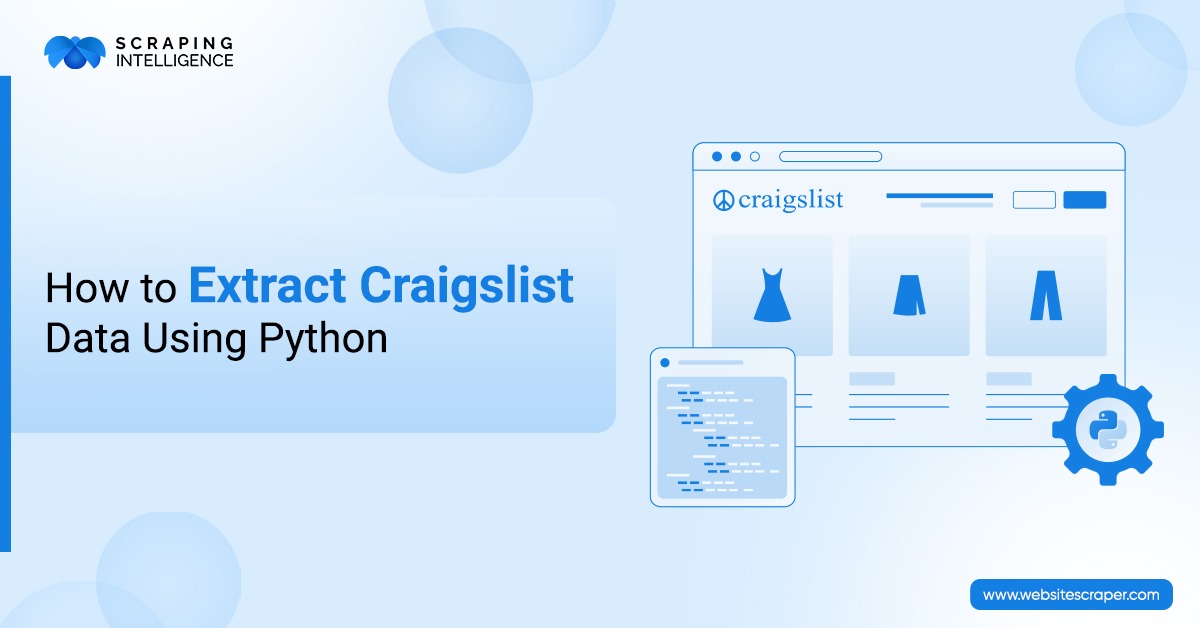
Craigslist is a globally recognized online classifieds platform and a valuable source of structured and semi-structured data. From apartment listings and job postings to local services and second-hand goods, it hosts a vast volume of real-time market information. Instead of manually browsing listings, businesses and analysts can extract Craigslist data using Python to automate data collection at scale.
What is Craigslist Data Scraping?
Python is a flexible and powerful language widely used for web scraping and data analysis. Whether you are a data analyst, researcher, or developer, using Python to scrape data from Craigslist allows you to convert public listings into actionable datasets that support decision-making, research, and automation.
What Is Craigslist Data Scraping?
Craigslist data scraping is the automated process of extracting publicly available information from Craigslist listings using scripts or tools. A craigslist scraper Python script can collect data from multiple categories such as housing, jobs, vehicles, and services across different locations.
Instead of manually copying listings, Python-based scrapers help retrieve structured data such as titles, prices, descriptions, and posting dates. This scraped data can be used for market research, lead generation, trend analysis, academic projects, or internal business tools.
Why Scrape Craigslist Data?
Craigslist contains millions of active listings across regions and industries, making it a strong data source for insights. Below are some common reasons businesses and analysts choose to extract Craigslist data using Python.
Market Trend Analysis
Scraped Craigslist data provides insights into demand patterns across jobs, real estate, and consumer goods. By analyzing listing frequency, pricing, and keywords, businesses can understand what products or services are trending in specific locations. Using Python to scrape data from Craigslist makes it easier to track changes over time and identify emerging opportunities.
Generate New Leads
A craigslist scraper Python solution can extract contact details, service requirements, and listing intent from posts. This helps businesses identify potential customers actively searching for products or services. With this data, marketing teams can align outreach campaigns with real user demand and improve lead quality.
Reselling Products
Scraping listings helps identify underpriced or high-demand products. By tracking pricing trends and seasonal variations, sellers can optimize resale strategies. Data from Craigslist also helps understand which keywords attract buyers and how pricing impacts response rates.
Understanding Local Economies
Craigslist listings reflect real-time economic activity at a local level. Job postings highlight in-demand skills and industries, while housing listings reveal rental and pricing trends across neighborhoods. When you extract Craigslist data using Python, this information can be aggregated to study employment growth, wage trends, and local market shifts.
Craigslist Data Types
Craigslist data types refer to the different attributes available within listings. Common data fields include:
Locations: City or neighborhood-level posting locations that help analyze regional demand and behavior.
Categories: High-level listing groups such as jobs, housing, for sale, or services.
Subcategories: More granular classifications within categories, such as cars & trucks, apartments, or customer service jobs.
Titles: Short listing headlines that provide insights into commonly used keywords and user intent.
Descriptions: Detailed listing content explaining features, conditions, or requirements.
Prices: Pricing data helps compare market value, detect fluctuations, and analyze affordability.
Images: Photos attached to listings that indicate product condition or service quality.
Contact Information: Available communication details such as email or phone numbers (when publicly visible).
Dates: Posting and update timestamps used to analyze listing freshness and response cycles.
Attributes: Category-specific fields like vehicle model, property size, or required job skills, useful for structured analysis.
Challenges While Scraping Craigslist Data
While Craigslist is publicly accessible, scraping it presents technical and compliance challenges:
Dynamic Content: Page structures may change, requiring ongoing scraper maintenance.
CAPTCHAs: Craigslist uses CAPTCHAs to restrict automated access, which complicates large-scale scraping.
Rate Limiting: Sending too many requests in a short time can trigger IP blocking. Controlled request intervals and proxy rotation help reduce this risk.
User Privacy: Scrapers must avoid collecting sensitive personal information and comply with applicable data protection regulations.
Large Data Volume: Multiple categories and locations result in high data volumes, increasing processing time and infrastructure needs.
Data Reliability: Listings are user-generated, leading to inconsistencies that require cleaning and validation.
Geo-Restrictions: Some listings are region-specific, limiting access across locations.
Legal and Ethical Considerations: It’s important to respect Craigslist’s terms of service and scrape responsibly using ethical practices.
Scraping Craigslist Using Python
Below is a practical example showing how Python can be used to scrape data from Craigslist.
Step 1: Setting Up the Environment
Install the required Python libraries:
pip install requests beautifulsoup4 pandas
Step 2: Get API Access
If you are using a scraping API, review its documentation and generate an API key. This helps manage IP rotation, CAPTCHAs, and request limits.
Step 3: Making Requests
Import required libraries and configure the request payload.
Using Python to extract Craigslist data enables businesses and analysts to gain valuable market insights, identify trends, and generate qualified leads. A well-built craigslist scraper Python solution helps automate data collection while improving accuracy and scalability.
However, Craigslist’s protective measures such as CAPTCHAs, IP restrictions, and content changes make large-scale scraping complex. Ethical scraping practices and compliant data collection methods are essential. By following responsible approaches or using managed scraping solutions, organizations can focus on converting Craigslist data into insights that drive smarter business decisions.
Let's Talk About Your Data Needs
Tell us what data you need, and we'll help you find the right solution.
Scraping Intelligence Editorial Team is a collective of data specialists, analysts, and researchers with expertise in web scraping, data extraction, and market intelligence. The team produces well-researched guides, actionable insights, and industry-focused resources that help businesses unlock the value of data and make informed, strategic decisions.
Latest Blog
Explore our latest content pieces for every industry and audience seeking information about data scraping and advanced tools.
Compare real estate data APIs vs. web scraping costs, including setup, infrastructure, maintenance, and data quality, to find the right solution for your needs.