The client is a large enterprise operating in the retail and e-commerce sector, serving customers across multiple markets. With a broad product portfolio and a highly competitive market environment, the organization regularly needed external data to understand competitor activity, pricing movements, product availability, and changing market conditions.
Previously, teams relied on various data sources and manual processes to collect and analyze market information. As the volume and frequency of changes increased, maintaining accurate and timely intelligence became increasingly difficult. The client therefore contacted Scraping Intelligence to build an automated data infrastructure capable of continuously collecting enterprise web data and transforming it into easy-to-understand business intelligence dashboards.
Client Requirement
The client approached Scraping Intelligence to automate external web data collection and make the resulting information accessible through centralized BI dashboards.
Their primary objective is to:
-
 Monitor competitor product prices and pricing changes.
-
Identify discounts, promotions, and market offers.
-
Automate data collection from multiple enterprise and e-commerce websites.
-
Track product availability and inventory status.
-
Reduce dependency on manual data collection and spreadsheet-based reporting.
-
Consolidate data from multiple sources into a standardized format.
-
Create dashboards for monitoring pricing, inventory, products, and market trends.
-
Identify emerging market trends and changes in consumer-facing product offerings.
-
Enable business teams to access actionable insights from a centralized data environment.
-
Provide teams with regularly refreshed data for faster decision-making.
Challenges
Based on initial discussions with the client, Scraping Intelligence identified numerous challenges affecting their existing data intelligence process:
-
Manual data collection required significant time and resources.
-
Difficulty collecting large volumes of data from multiple websites.
-
Product, pricing, and inventory information frequently changed.
-
Teams had limited visibility into competitor price movements.
-
Data from different sources was available in inconsistent formats.
-
Maintaining historical records for price and inventory comparison was challenging.
-
Monitoring product availability across multiple retailers was difficult.
-
Delayed data updates slowed business decisions.
-
Manual spreadsheets made large-scale data analysis inefficient.
-
Identifying meaningful market trends from fragmented datasets was challenging.
-
Scaling the existing process to accommodate additional websites and markets was difficult.
-
Maintaining data accuracy and consistency across multiple sources required continuous effort.
Solutions
To fulfill the client’s requirements, our team developed an automated enterprise web data collection and business intelligence solution.
The major components of the solution included:
-
Our team extracted relevant product, pricing, inventory, promotion, and competitor information.
-
We automated data collection from the client’s required web sources to minimize manual intervention.
-
We cleaned the collected data to remove duplicates, inconsistencies, and irrelevant records.
-
We standardized data fields across sources to create a consistent dataset.
-
The client maintained historical datasets to compare changes over time.
-
Implemented validation processes to improve data quality and reliability.
-
We connected the processed data to a centralized data environment for easier access and analysis.
-
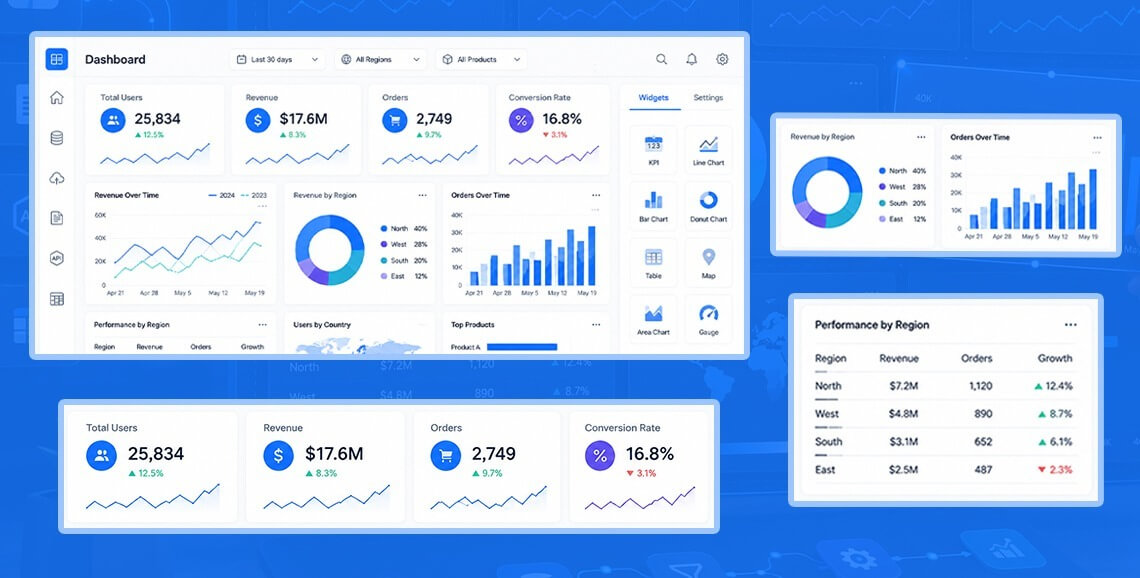
We developed dashboard views for pricing, inventory, promotions, product intelligence, and competitor monitoring.
-
We integrated the structured dataset with BI dashboards to provide a clear view of market conditions.
-
Automated data refreshes helped the client maintain a more current view of changing market information.
Impact
The automated enterprise web solution delivered by Scraping Intelligence significantly improved the client’s ability to collect, organize, and analyze external market information.
By replacing fragmented manual processes with automated data collection and centralized BI dashboards, the client gained:
-
Reduced dependency on manual data collection and reporting.
-
Faster access to regularly updated market data.
-
Easier identification of pricing and promotional trends.
-
Greater visibility into competitor pricing and product activity.
-
Improved monitoring of product availability and inventory changes.
-
Centralized access to information collected from multiple sources.
-
Easier identification of pricing and promotional trends.
-
Better consistency across large and complex datasets.
-
Historical data for identifying changes and long-term trends.
-
Faster access to actionable insights for business teams.
-
Improved scalability for monitoring additional websites and markets.
The dashboards gave decision-makers a consolidated view of important market signals instead of requiring them to review multiple websites and spreadsheets manually. As a result, teams could spend less time gathering information and more time analyzing it and acting on emerging opportunities.
Conclusion
Building an effective business intelligence environment requires more than simply collecting large volumes of web data. Businesses need a reliable process to collect, clean, standardize, validate, and visualize that data before it can support meaningful decisions.
Through automated enterprise web data collection and BI dashboard integration, Scraping Intelligence helped the client transform scattered external information into a centralized source of actionable intelligence. The solution provided continuous visibility into pricing, inventory, competitor activity, promotions, and market trends while reducing the limitations of manual data collection.
This case study demonstrates how combining enterprise web scraping with business intelligence dashboards through Scraping Intelligence can help organizations turn constantly changing web data into timely insights and make faster, more informed business decisions.