











Back to Crawler

GrabFood Data Scraper

grabfood-data-scraper
Food & Restaurant

GrabFood Data Scraper enables businesses to extract restaurant and food delivery insights from the GrabFood platform. Collect restaurant listings, food menus, pricing data, delivery coverage, ratings, discounts, and order availability across Southeast Asia. This helps food delivery startups and analysts monitor regional dining trends with precise and scalable datasets.

grabfood-data-scraper

What is GrabFood Data Extraction?

Our Grab Food data scraper is an automated restaurant data extraction platform that gathers structured food delivery insights from Food.Grab.com. Businesses can collect restaurant listings, menu catalogs, customer reviews, pricing information, delivery coverage, and promotional offers in real time. The scraper enables scalable food delivery analytics and regional market intelligence.


What Data Can You Extract from GrabFood?

GrabFood data scraper is designed to extract the following data:

restaurant_listings menu_pricing restaurant_location delivery_info reviews_ratings promotions_offers contact_data


Key Features of GrabFood Data Scraper

GrabFood data scraper developed by us is not just a tool; it is a proactive approach that is leveraged by hospitality professionals and food businesses to make informed decisions. It helps them develop robust strategies and improve overall business outcomes.

  • Real-Time Food Data Collection
  • Automated Restaurant & Food Listings Extraction
  • Structured Data Output for Easy Use
  • Location-Based Food Delivery Data Extraction
  • Scalable Crawling for Large Food Platforms
  • Custom Data Field Selection Based on Requirement
  • Multi-Platform Data Support Across Food Apps

How Does GrabFood Data Scraper Work?

Our GrabFood data scraper is designed for simplicity and automation. With just a few inputs, you can extract large-scale data efficiently:

Step

Initiate Advance Search

Provide restaurant names, dish keywords, or target URLs to scrape food data from GrabFood. The crawler will extract details like restaurant id, name, address, city, state, postal code, country code, aggregate ratings, cost, cuisines, email id, menu and opening hours.

Step

Download Structured Data

Export scraped GrabFood restaurant and food delivery data in structured formats like CSV, Excel, or JSON for analysis and reporting.

Step

Schedule Automated Crawlers

Schedule the GrabFood Scraper to run hourly for real-time menu/pricing updates, daily for review trends, or weekly for competitor benchmarking.


Benefits of Using the GrabFood Data Scraper

Our GrabFood data scraper is useful to:

  • Get real-time food & dining trend awareness
  • Seamlessly improve menu quality and offerings
  • Perform customer review and feedback analysis
  • Expand restaurant visibility & reach
  • Track reservation and occupancy levels

Use Cases of GrabFood Data Scraper

GrabFood restaurant data scraper helps data teams to automate large-scale restaurant and dining data collection for applications, analytics, and market intelligence.

  • Forecast Restaurant Trends: Evaluate local dining trends, including cuisine trends, and customer preferences.
  • Food Delivery Platform Expansion: Identify restaurants to onboard for delivery or aggregation platforms.
  • Competitive Pricing Analysis: Compare menu pricing and offers across different restaurants.
  • Location Intelligence & Expansion: Discover areas with high demand to open any restaurant or branch.
  • Lead Generation for B2B Sales: Build customized restaurant contact lists for long-term business success.
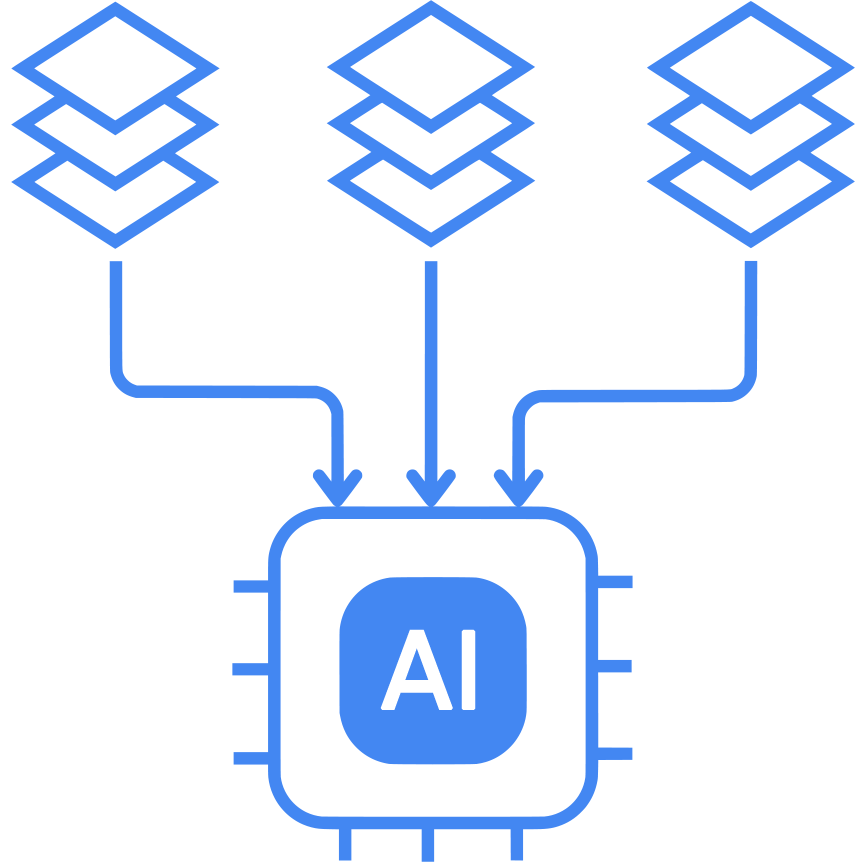
  • AI & Data Analytics Projects: Feed structured restaurant data into machine learning and analytics systems.

We ensure that you receive actionable insights within defined time frames so that you can use them for your business.

Looking for a Custom GrabFood Data Scraping Solution?

Get in Touch

Get a Free Sample of GrabFood Scraped Data

The extracted GrabFood data can be easily downloaded or integrated into your systems. Supported formats include CSV, Excel, XML, MySQL, MS Access, and other database formats, making it convenient for analysis and reporting.