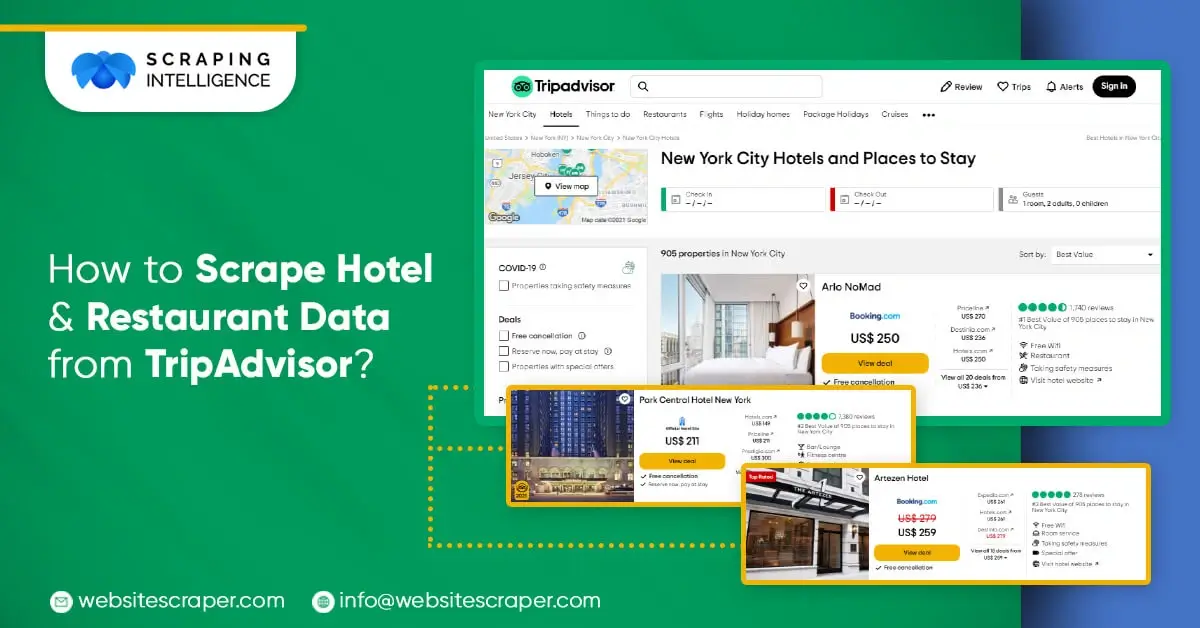
How to Scrape TripAdvisor Data for Hotels & Restaurants: A Complete Guide
Category
Hotel & Travel
Publish Date
July 23, 2021
Author
Scraping Intelligence
TripAdvisor is a well-known platform that serves as a go-to source for reviews, ratings, and bookings of hotels, restaurants, tours, and activities. For travelers, it provides the opportunity to compare prices, read authentic reviews, and find the best deals. For businesses in the travel and hospitality industry, TripAdvisor offers valuable data that can help you monitor competitors, optimize pricing strategies, and improve customer satisfaction.
This guide will walk you through how to ethically scrape TripAdvisor data for hotels and restaurants using Python, as well as how to extract valuable insights, such as customer reviews, ratings, pricing information, and offers. We’ll also discuss how to handle scraping and avoid being blocked, and share best practices for ensuring compliance with TripAdvisor’s Terms of Service.
What is TripAdvisor Data?
TripAdvisor is an online travel and restaurant review website where users can find and share information about travel destinations, including hotels, restaurants, and local attractions. The platform also offers reviews, photos, pricing, and booking details, making it a valuable resource for both travelers and business owners.
For businesses, the data available on TripAdvisor can be a goldmine. From pricing and offers to customer sentiment, TripAdvisor allows you to track competitors, gauge market demand, and gain insights into customer preferences. Scraping this data allows businesses to monitor trends, optimize pricing models, and adjust their offerings based on what consumers are saying.
Why Scrape TripAdvisor Data?
Scraping TripAdvisor data can provide a variety of insights for businesses in the travel, restaurant, and hospitality industries. By collecting this data, you can:
Analyze customer reviews to understand public perception of your business.
Monitor competitor pricing to stay competitive in the market.
Track offers and deals to help with promotional planning.
Enhance customer experience by analyzing sentiment and feedback.
Collect market research data for developing new services and offerings.
Scraping TripAdvisor data is also an essential tool for businesses looking to create a customized dataset for market analysis and competitive intelligence.
How to Scrape TripAdvisor Data
The most efficient way to scrape TripAdvisor data is using Python web scraping techniques. By utilizing libraries like BeautifulSoup and requests or frameworks such as Scrapy, you can extract data from TripAdvisor’s publicly accessible web pages. Here's how to start:
Setting Up Your Scraper
To scrape TripAdvisor data, first, you’ll need to set up the necessary Python libraries and frameworks. You’ll be using the requests library to make HTTP requests to TripAdvisor pages and BeautifulSoup to parse the HTML content. Here’s a simple example to get started:
Specific data points (e.g., hotel name, reviews, ratings) are extracted using find and find_all methods.
Handling Pagination
Pagination is a common challenge when scraping websites with multiple pages of data. TripAdvisor displays reviews on multiple pages, so you’ll need to handle pagination to scrape all relevant data. Here’s how you can loop through multiple pages:
base_url = 'https://www.tripadvisor.com/Hotel_Review-g30196-d113702-Reviews-Hotel_Austin-Texas.html'
page_number = 1
while True:
    url = f'{base_url}-or{page_number * 10}'
    response = requests.get(url)
    soup = BeautifulSoup(response.text, 'html.parser')

    # Extract reviews and ratings (same as above)
    reviews = soup.find_all('span', {'class': 'reviewCount'})
    if not reviews:
        break  # Exit if no more reviews

    # Process data here...
    page_number += 1
Extracting Key Data Points
To collect valuable data like hotel name, reviews, ratings, and pricing information, you’ll need to locate the HTML elements containing these values. For instance:
                        # Extract hotel name
hotel_name = soup.find('h1').text

# Extract reviews
reviews = soup.find_all('span', {'class': 'reviewCount'})

# Extract ratings (bubble rating can be converted to numerical values)
ratings = soup.find_all('span', {'class': 'ui_bubble_rating'})

# Extract pricing and offers
pricing = soup.find('div', {'class': 'price'}).text
offers = soup.find_all('span', {'class': 'deal_see_all'})
The script above can be expanded to scrape other data points relevant to your business needs.
Scrape TripAdvisor Reviews for Market Research
One powerful application of scraping TripAdvisor data is to collect customer reviews and perform sentiment analysis. By analyzing reviews, you can understand how customers perceive your services, identify common complaints, and assess your brand reputation. Here's how to collect reviews from a TripAdvisor page:
reviews = []
for review in soup.find_all('div', {'class': 'review-container'}):
    review_text = review.find('p').text
    reviews.append(review_text)

# Perform sentiment analysis (using libraries like TextBlob or VADER)
from textblob import TextBlob

sentiments = [TextBlob(review).sentiment.polarity for review in reviews]
average_sentiment = sum(sentiments) / len(sentiments)
print(average_sentiment)
Sentiment analysis can help you determine if the majority of reviews are positive, negative, or neutral. This is crucial for improving customer service and making informed decisions.
Best Practices for Ethical Scraping
When scraping TripAdvisor data, it’s essential to follow ethical guidelines and respect TripAdvisor's terms of service. Here are some best practices:
Respect robots.txt: TripAdvisor's robots.txt file specifies which pages can or cannot be scraped. Always check and adhere to these rules.
Avoid Overloading Servers: Scraping too frequently can put unnecessary load on TripAdvisor's servers. Use polite scraping techniques, such as adding delays between requests.
Use Proxies: To avoid being blocked, consider using rotating proxies, which help distribute your requests and prevent rate limiting.
Data Storage: Always store the scraped data responsibly. Do not misuse or sell the data without proper permission.
Applications of TripAdvisor API
For those who don’t want to build a TripAdvisor scraper from scratch, TripAdvisor offers an API that allows you to integrate reviews and data directly into your website. The TripAdvisor API is a great way to access reviews, ratings, and other key information without worrying about scraping restrictions. It’s an ideal choice for certified travel businesses and offers the following:
Fetching Reviews and Ratings: Integrate user-generated content into your website.
Listing Hotel Information: Fetch pricing, amenities, and offers for hotels.
Competitive Intelligence: Compare your own business with competitors by analyzing reviews and ratings.
Conclusion
Web scraping is an effective and ethical method for collecting data from TripAdvisor. Whether you're in the travel industry or running a restaurant, scraping TripAdvisor data allows you to gain valuable insights into customer sentiment, market trends, and competitor strategies. By adhering to ethical guidelines and utilizing Python for web scraping, you can build custom datasets to enhance your decision-making process.
If you are looking to gather TripAdvisor data for market research, sentiment analysis, or competitive pricing, scraping offers a powerful and efficient way to do so. Just ensure you are following best practices to avoid legal or ethical issues. If you're interested in scraping Tripadvisor reviews, collecting restaurant data, or exploring hotel pricing, we recommend using the TripAdvisor API or employing ethical scraping methods to gain valuable insights.
Let us help you with your TripAdvisor data scraping needs, contact us today!
Frequently Asked Questions
1. How can I scrape TripAdvisor data for hotels and restaurants?+
You can scrape TripAdvisor data by using Python and libraries like BeautifulSoup and requests. These tools allow you to fetch hotel names, reviews, ratings, pricing, and other details from TripAdvisor. You can also handle pagination to scrape multiple pages of reviews and data efficiently.
2. What types of data can I extract from TripAdvisor for market research?+
You can extract a wide range of data from TripAdvisor for market research, including:
Hotel reviews and ratings: Analyzing customer sentiment.
Facilities and amenities: Understanding the features offered by hotels and restaurants.
Booking providers and deals: Monitoring offers and special discounts.
3. Is scraping TripAdvisor reviews useful for sentiment analysis?+
Yes, scraping TripAdvisor reviews is a powerful tool for sentiment analysis. By analyzing reviews, you can gauge public perception of a hotel or restaurant, identifying trends in customer satisfaction, common complaints, and overall sentiment, which helps in improving customer service.
4. How do I avoid being blocked when scraping TripAdvisor data?+
To avoid being blocked when scraping TripAdvisor data, consider these tips:
Use rotating proxies to distribute requests.
Respect robots.txt and only scrape allowed pages.
Introduce delays between requests to prevent overloading the server.
Be mindful of the rate limit and avoid scraping too frequently.
5. How do I scrape TripAdvisor for competitor hotel prices?+
To scrape competitor hotel prices on TripAdvisor, input the location, check-in, and check-out dates into your scraper script. Use Python with libraries like BeautifulSoup to extract pricing data for multiple hotels, compare rates, and analyze price trends.
6. Can I collect restaurant data from TripAdvisor for competitive intelligence?+
Yes, scraping TripAdvisor allows you to collect restaurant data, including reviews, ratings, and popular menu items. This information helps you compare your restaurant with competitors, analyze customer feedback, and optimize your menu or service offerings.
7. What is the TripAdvisor API, and how can I use it?+
The TripAdvisor API provides a way for certified businesses to access TripAdvisor data, including reviews, ratings, and hotel details. It allows you to integrate TripAdvisor reviews and business information directly into your website or application without the need for manual scraping.
8. What are the ethical guidelines for scraping TripAdvisor data?+
Ethical scraping involves respecting TripAdvisor's robots.txt file, ensuring compliance with local laws and regulations (like GDPR), and avoiding overloading TripAdvisor's servers. Use polite scraping techniques such as adding delays between requests, limiting the number of requests, and ensuring proper data storage.
About the Author
Scraping Intelligence
Scraping Intelligence Editorial Team is a collective of data specialists, analysts, and researchers with expertise in web scraping, data extraction, and market intelligence. The team produces well-researched guides, actionable insights, and industry-focused resources that help businesses unlock the value of data and make informed, strategic decisions.
Latest Blog
Explore our latest content pieces for every industry and audience seeking information about data scraping and advanced tools.