How Real Estate Data Intelligence Helps Investors Reduce Risk and Maximize Returns?
Category
Real Estate
Publish Date
July 21, 2026
Author
Scraping Intelligence
Introduction
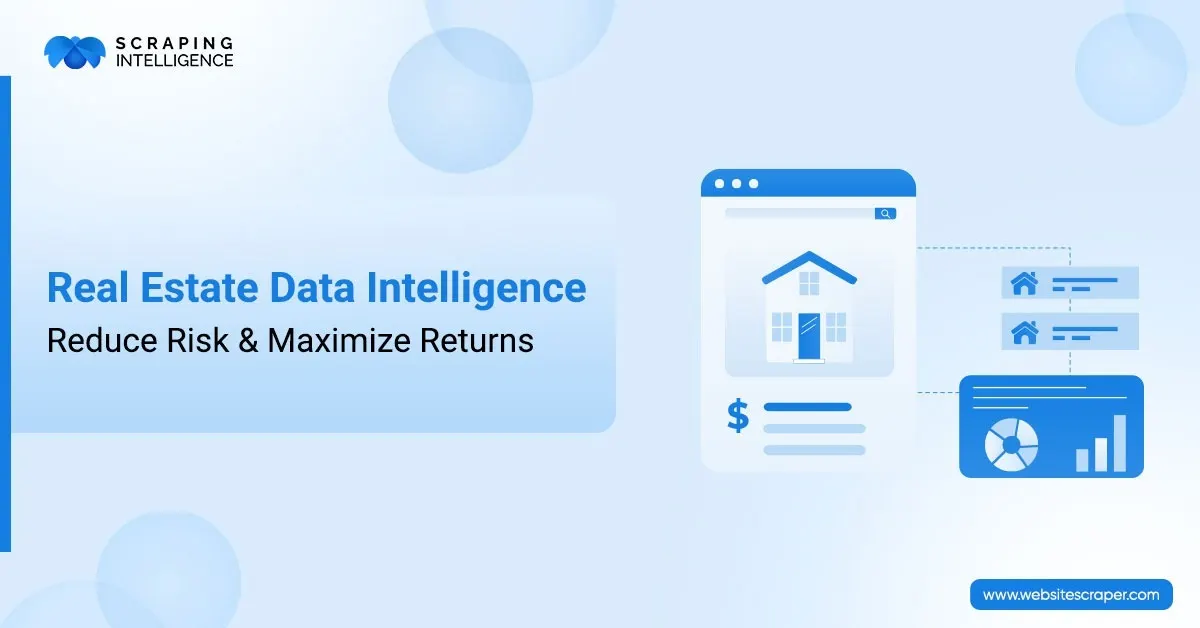
The real estate market is more competitive and data-driven than ever before, making informed decisions essential for investors, developers, and property firms. Instead of relying on intuition alone, leading companies use real estate data intelligence to analyze property values, market trends, demographic shifts, rental yields, and economic indicators before making investment decisions. This data-driven approach helps reduce risks, identify high-growth opportunities, and improve long-term portfolio performance.
In this blog, we will discover how real estate companies use data intelligence throughout the investment lifecycle, from market research and property valuation to risk assessment and portfolio management. We will also explore the role of real estate analytics, predictive analytics, big data in real estate, and web scraping for real estate in transforming raw market data into actionable insights. Whether you're an investor, real estate agency, or PropTech business, understanding these strategies can help you make smarter, evidence-based decisions.
At Scraping Intelligence, we help businesses collect clean, reliable property data at scale, giving them the accurate insights needed to make confident real estate investment decisions.
What Is Real Estate Data Intelligence?
Data intelligence is the practice of collecting, cleaning, and studying large amounts of information to reveal patterns humans might miss. In real estate, this means putting together a clear picture from price history, rental yields, foot traffic, zoning records, and even social sentiment. Instead of guessing, companies now measure. They ask hard questions, and the data answers them with evidence rather than opinion.
The shift matters because real estate involves huge sums and long-term horizons. A single property investment analysis mistake can cost millions and drag on for years. When firms use big data in real estate, they lower that risk and spot chances their competitors overlook. In short, better inputs create better outcomes across the whole portfolio.
Top Data Sources Used in Real Estate Investment
Strong decisions start with strong sources, and modern investment teams rarely trust just one. They pull from many streams at once, then merge everything into a fuller view of the market. Most real estate analytics programs begin with live listing data, which shows current prices, days on market, and how much inventory is available at any moment. That picture only makes sense, though, when you add demographic records on top of it. Income levels, age groups, migration patterns, and household trends reveal where real demand is heading over the long run.
From there, teams fold into the wider economy. Whether a market is heating up or cooling down depends on interest rates, employment numbers, and signs of local business growth. Location matters as well, so investors map out proximity to schools, transit, hospitals, and planned development zones before they commit a dollar. Finally, the most insightful companies use alternative data sources that others ignore, such as foot traffic data, satellite imagery, online reviews, and shifts in social sentiment. When these sources align, they reveal gaps and opportunities that a single report can never uncover. This is where web scraping for real estate becomes an unassuming superpower, providing new listings directly to the analysis engine.
How Real Estate Data Intelligence Improves Every Investment Stage?
Every deal passes through clear stages, and data adds value at each one. The table below maps common tasks to the PropTech data that supports them. It gives you a glance at where insight makes the biggest difference.
Investment Stage
Data Used
Business Benefit
Early Market Research
Listing prices, local supply shifts, and who is actually
moving into the area
Spots neighborhoods on the rise before competitors notice
Pricing a Property
Recent comparable sales, real rental yields, and the
building's true condition
Prices hold up under scrutiny because they rest on proof,
not hope
Weighing the Risk
Economic signals, vacancy rates, and even local crime
patterns
Keeps firms out of deals that look fine but hide real
trouble
Managing the Portfolio
Past performance, forward forecasts, and honest cash flow
models
Keeps returns steady rather than lumpy across every asset
held
Choosing When to Sell
Price momentum plus early signs of buyer demand
Times the exit while the market still has energy left
As the table shows, predictive analytics in real estate touches the entire journey. It turns scattered facts into a repeatable system that any team can follow with confidence.
Why Data-Driven Decisions Matter in Real Estate Investing?
Numbers ground decisions in reality, and the industry trend toward data is impossible to ignore. Consider a few widely cited facts that show how far this movement has traveled.
The global PropTech market was valued in the tens of billions of dollars and continues to expand each year.
A large share of investors now says data and analytics directly shape their buying choices.
Firms using real estate market analysis tools often report faster deal cycles and fewer costly errors.
Rental and pricing forecasts built on machine learning increasingly beat traditional manual estimates.
These figures share one message. The companies that treat data-driven decision-making as a core habit tend to outperform those that still rely on instinct alone. Facts win trust, and trust wins deals.
Top Real Estate Analytics Tools and Technologies
Behind every smart decision sits a stack of practical technology. These tools gather, store, and study data so teams can act quickly. Here are the main building blocks that real estate technology leaders depend on today.
Web scraping tools: technologies that harvest prices, listings and real-time market information as a whole.
Machine learning models: techniques that predict prices, rent and need for services with ever-growing precision.
Business intelligence dashboards: devices that visualize original data in a meaningful way.
Geographic Information Systems (GIS): instruments that share data on location and properties.
Cloud-based data platforms: the biggest storage for all the data that needs to be quickly processed.
Reliable data collection sits at the base of this whole stack. If you need clean, structured property data, our team at Scraping Intelligence builds custom scraping solutions that feed these systems directly. Good tools are only as strong as the data flowing through them.
How Real Estate Companies Turn Data into Investment Decisions?
Gathering data is the straightforward part. Turning it into a sound decision is where firms separate themselves, and a strong real estate investment strategy treats the process as a working cycle rather than a single report. Consider a firm evaluating a mid-sized apartment block. The team begins by pulling market, financial, and location data from trusted sources, then spends real effort cleaning it, because raw feeds carry duplicates and errors that can distort an entire valuation.
Once the data holds up, the analysis carries the weight. Models and dashboards surface the trends and quieter risks that a quick spreadsheet review would overlook. The decision that follows should feel almost routine, since clear evidence tends to point toward the right move on its own. What truly sets leading firms apart is the final step. Every call is reviewed, measured against how it performed, and those lessons are fed into the next opportunity. This discipline steadily removes guesswork and builds an investment portfolio that grows on evidence rather than luck.
Benefits of Using Data Intelligence in Real Estate
Risk is usually the first thing to improve, because solid evidence exposes weak opportunities before a firm commits capital to them. Speed follows close behind, since a well-built dashboard answers in minutes what once took analysts several weeks to piece together. Together, lower risk and faster judgment tend to lift returns, as sharper insight helps teams enter at the right price and exit before momentum fades.
Forecasting is where the advantage compounds. Models trained on real estate market analysis predict demand and pricing with a precision that instinct simply cannot reach. Transparency matters just as much on the relationship side because clear, defensible data builds confidence with the partners and lenders who fund future growth. None of these gains arrive as a dramatic breakthrough. They accumulate quietly across every deal, which explains why so many established firms now treat smart real estate investment as a data problem first and a property problem second.
Final Thoughts
The property business has shifted, and information now sits at the center of nearly every decision that matters. Firms that commit to real estate data intelligence consistently make sharper and safer calls than those still guided by instinct alone. That advantage shows up at every stage, from the first round of market research to the final judgment on when to sell. The direction of travel is unmistakable, and it strengthens with each passing year.
Building this edge starts with one thing, and that is dependable data. At Scraping Intelligence, we supply the clean, structured property data that serious analysis depends on. If you are ready to trade guesswork for evidence, reach out to our team and let us help you turn raw numbers into decisions you can defend.
Share this article:
About the Author
Scraping Intelligence
Scraping Intelligence Editorial Team is a collective of data specialists, analysts, and researchers with expertise in web scraping, data extraction, and market intelligence. The team produces well-researched guides, actionable insights, and industry-focused resources that help businesses unlock the value of data and make informed, strategic decisions.
Latest Blog
Explore our latest content pieces for every industry and audience seeking information about data scraping and advanced tools.
See how the travel industry uses web scraping to track fares, room rates, availability, and reviews, plus how to choose the right data extraction solution.