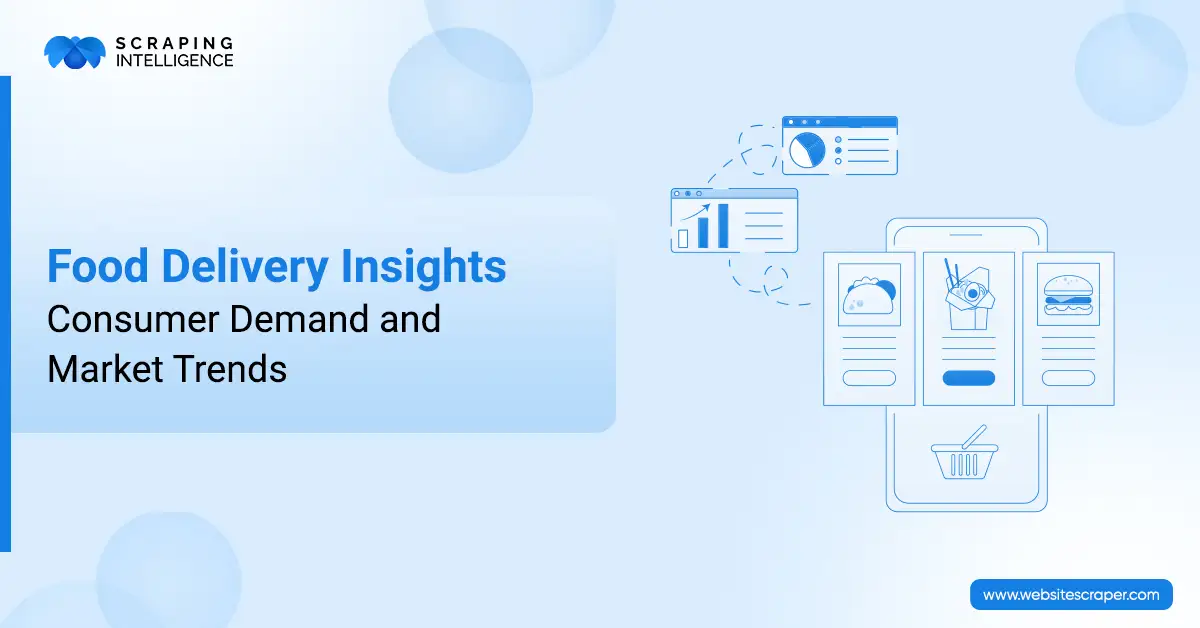
How Food Delivery Insights Reveal Consumer Demand and Market Trends?
Category
Food & Restaurant
Publish Date
Jun 15, 2026
Author
Scraping Intelligence
Why do some restaurants identify emerging food trends months before their competitors? The answer often lies in the millions of food delivery orders generated every day. Every food order placed on an app holds clues about what customers want, when they want it, and how much they will pay. When this data is analyzed it becomes a powerful source of food delivery insights that businesses can use to understand consumer demand and anticipate market shifts.
For restaurants, food brands, and delivery platforms, relying on assumptions is no longer enough. Consumer preferences can change quickly, new food trends can emerge overnight, and competitors constantly adjust their menus and pricing strategies. Food delivery analytics helps businesses track these changes in real time, providing a clearer picture of what customers actually want rather than what surveys suggest.
In this blog, we explore how food delivery data reveals consumer demand, how market trends emerge from ordering behavior, and why businesses increasingly depend on data-driven decision making to stay competitive. Whether you operate a single restaurant or manage a national brand, understanding these insights can help you make smarter decisions, reduce guesswork, and uncover new growth opportunities.
What Are Food Delivery Insights?
Food delivery insights are the patterns and trends discovered by analyzing large volumes of ordering data collected from food delivery apps, restaurant websites, menus, customer reviews, and pricing information. While a single order reveals very little, or even millions of orders can gather valuable information about consumer demand, purchasing habits, and emerging food trends.
Compare it to weather tracking. One cloudy afternoon means little, but months of recorded conditions reveal real seasons and reliable patterns. Food delivery analytics works the same way, turning small everyday actions into a readable picture of how people behave. It transforms everyday customer orders into meaningful business intelligence that helps companies understand how people buy, what they prefer, and how their behavior changes over time.
This type of restaurant data analysis answers critical business questions. Which dishes are gaining popularity? Which locations generate the highest demand? How sensitive are customers to price changes? Which food trends are beginning to emerge? The answers already exist within the data, waiting to be analyzed and turned into actionable decisions.
Why Consumer Demand Shows Up First in Food Orders?
Consumer preferences are often revealed more clearly through actions than words. A customer may say they prefer healthy meals, but their ordering behavior might tell a different story. This is why food delivery data has become such a valuable source for consumer demand analysis. Similar to surveys or opinions, order data reflects real purchasing decisions backed by actual spending.
Food is also one of the most frequently purchased products, generating a constant stream of fresh consumer data. Whether it is a growing preference for protein-rich meals, an increase in late-night snacking, or a surge in comfort food during certain seasons, these shifts often appear in delivery orders long before they become widely recognized market trends. By tracking food delivery analytics in real time, businesses can identify changing consumer behavior early, adapt their strategies faster, and stay ahead of competitors who are still relying on assumptions rather than data.
A few reasons food orders reveal demand so fast:
Frequency of food ordering is much higher than buying clothing or electronics which generates a lot of new data.
The true value is determined with the actual spending vs. what was reported in surveys, therefore actual sales will always surpass the survey data.
All orders can be linked to their neighbourhood which means that demand is shown street by street.
Order fulfilment is affected by cravings, stress, and celebrations and these can all be tracked as to how they impact peaks and valleys of ordering.
Put these together, and online food ordering trends start acting like an early warning system for the wider economy.
How Market Trends Emerge From Delivery Data?
Zoom out from one city, and bigger pictures form. Market trends are demand patterns that grow large enough to reshape an industry. Food delivery market analysis lets you watch these patterns develop early, which hands fast movers a real advantage.
Think about the rise of healthy bowls or the boom in late-night snacking. Neither appeared overnight in headlines. Both built quietly inside the data first. A company watching food delivery statistics could have spotted the climb months ahead and adjusted its menu, pricing, or ads to match.
The table below shows the kinds of signals delivery data commonly surfaces.
Trend Signal
What It Tells You
Business Action
Rising dish popularity
A flavor or item is gaining fans fast
Add or promote that item early
New peak order times
Demand is shifting to fresh hours
Adjust staffing and delivery zones
Price sensitivity changes
Shoppers react more to cost
Test smarter pricing or bundles
Cuisine diversity growth
Local tastes are broadening
Expand menu variety carefully
Loyalty pattern shifts
Repeat orders rise or fall
Reshape rewards and retention plans
Each row is a small window into the future. Read several at once, and you get a strong sense of where the food delivery industry is heading.
Want to turn raw orders into real strategy?
At websitescraper.com, we gather clean, reliable food delivery data so you can spot demand before competitors do. Contact us today and start deciding with real numbers.
The Practical Benefits for Restaurants and Brands
Theory is fine, but value lives in action. Businesses that use food delivery data scraping gain advantages across nearly everything they do.
Better menu planning: Once you know which items sell and which sit untouched, you stop spending money on dishes nobody wants. Menus get built around proven favorites instead of hunches.
Sharper pricing: Competitor price tracking shows what others charge right now. You can match them, beat them, or position yourself with confidence rather than guesswork.
Smarter marketing: Demand data tells you who to target and when. A promotion performs much better when it matches what people already crave that week.
Stronger expansion choices: Thinking about a new location? Location demand data shows whether hungry customers are actually there before you commit to a lease.
Here is a quick checklist of what good insights deliver:
A clear view of top sellers and dead weight on the menu.
Live awareness of rival pricing and promotions nearby.
Reliable timing for ads, deals, and launches.
Confidence about where future demand really lives.
Early signals of changing tastes before they go mainstream.
This is why food delivery analytics shifted from a nice extra to a core business need. For more, see our internal guide on web scraping for business growth and how clean data drives better choices.
Facts That Show the Power of Food Delivery Data
Some numbers help ground the point. The global online food delivery sector has grown into a market worth hundreds of billions of dollars, with forecasts pointing to steady growth in the years ahead. Most of these orders come from mobile phones rather than desktops, and a large share of revenue comes from loyal, returning customers, which makes retention data valuable. Lunch and dinner stay the busiest windows, while late-night demand keeps rising.
The takeaway is plain. The food delivery industry is not a passing fad. It is a deep, fast-moving stream of consumer signals, and data-driven decision making built on it gives companies a lasting edge.
How to Start Using Delivery Insights the Right Way?
You do not need a huge team or budget to begin, just a clear plan and clean data. Start by deciding which question matters most. Maybe you want your strongest selling hours, or maybe you need to track a competitor's pricing.
Once the goal is set, gather the right data through reliable web scraping services that pull menus, prices, and availability accurately and ethically. Messy data leads to messy conclusions, so quality matters more than volume. Then comes the interesting part, which is reading the patterns and acting on them.
Keep a few habits in mind:
Don’t try to keep tabs on everything. Start with one simple question.
Keep your data up to date because demand is always changing. Outdated data will lead you astray in many ways.
Analyze your data for long periods of time to locate actual patterns rather than short-lived daily fluctuations.
Make use of the information you discover as findings are useless without implementation activity.
Handled well, food delivery insights become a steady compass pointing your business toward what customers actually want.
Stop guessing and start knowing. The team at websitescraper.com delivers accurate, ready-to-use food delivery data built around your goals. Reach out now and read the market with confidence.
Conclusion
Food delivery data is one of the clearest views into what customers want right now. Gathered together, everyday orders form a reliable map of consumer demand and emerging market trends, and the businesses that learn to read that map outperform those still relying on guesswork.
We covered how food delivery insights reveal honest demand quickly, how broad trends grow from daily orders, and how brands of any size can act on these signals. The data flows past every hour, and the only real question is whether you use it.
If you are ready to turn raw orders into growth, websitescraper.com can help. We gather clean, accurate, and timely food delivery data so you understand your market deeply and move with confidence. Visit websitescraper.com and find out what your customers truly crave.
Frequently Asked Questions
What exactly are food delivery insights? +
Food delivery insights are the helpful things we learn from analyzing food order data, such as menus and prices. By looking at this information together, we can understand what people like to eat and how eating habits change over time.
How does food delivery data show consumer demand?+
When people order food, it shows what they really like better than just asking them. Because people order food all the time, we get new information quickly. This helps us see what kinds of food are getting popular before other people do.
Can small restaurants benefit from this data too?+
A single location can benefit a lot from food delivery analytics. With this data, a small restaurant can improve its menu, set better prices, and time promotions based on actual demand instead of guessing. This helps the restaurant compete with larger brands.
Is gathering food delivery data legal and ethical? +
Web scraping is a common business practice when done by trustworthy services that collect publicly available data and comply with each site's rules. The key is to choose a provider that uses ethical methods and avoids questionable shortcuts.
Share this article:
About the Author
Scraping Intelligence
Scraping Intelligence Editorial Team is a collective of data specialists, analysts, and researchers with expertise in web scraping, data extraction, and market intelligence. The team produces well-researched guides, actionable insights, and industry-focused resources that help businesses unlock the value of data and make informed, strategic decisions.
Latest Blog
Explore our latest content pieces for every industry and audience seeking information about data scraping and advanced tools.
Learn how to scrape social media data ethically. Collect accurate, compliant data without risking bans or legal issues. Build a defensible dataset today!