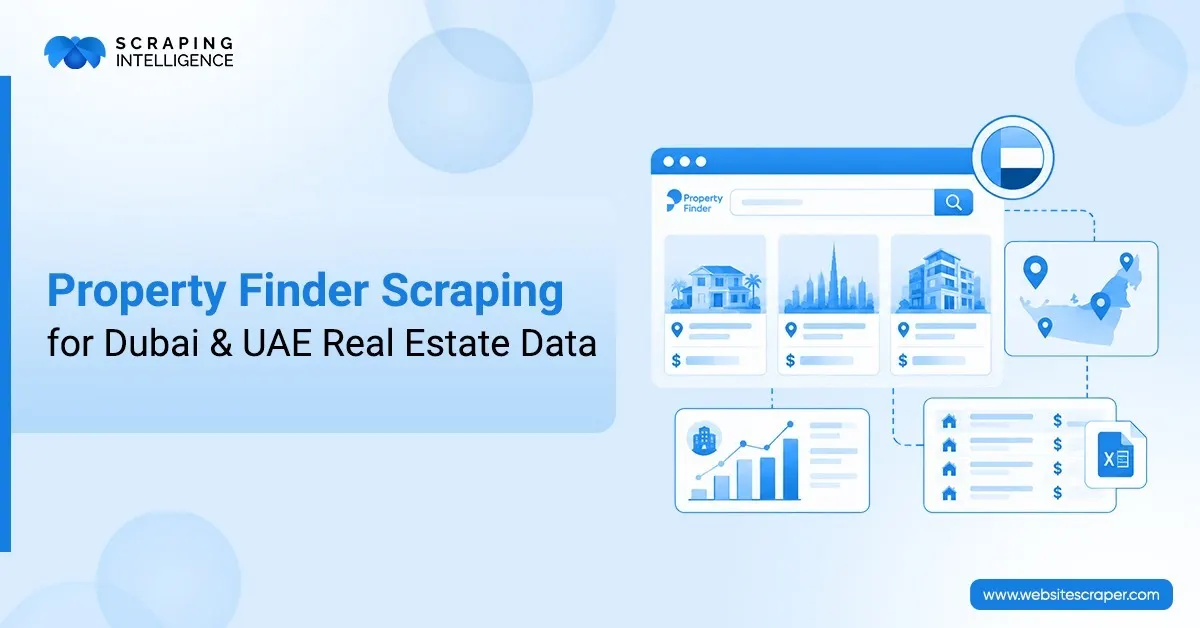
Property Finder Scraping for Dubai & UAE Real Estate Data
Category
Real Estate
Publish Date
Nov 03, 2026
Author
Scraping Intelligence
Dubai’s real estate sector has reached a record AED 917 billion in property transactions in 2025, making a 20% year-over-year increase. (Source: The Public Debt Management Office (DMO)). As one of the UAE’s leading business and investment destinations, Dubai continues to attract property investors, homebuyers, tenants, and real estate developers from around the world. From luxury apartments on Sheikh Zayed Road to lavish villas on The Palm Island, the market offers diverse opportunities, but keeping track of changing property prices, rental rates, and listing availability can be challenging.
For real estate agencies, investors, and property researchers, Property Finder scraping provides a practical way to collect publicly available UAE property listing data. By collecting information such as UAE property prices, locations, property types, bedroom counts, floor areas, etc., businesses can compare properties across Dubai and other UAE markets, identify pricing patterns, and spot potential investment opportunities. Instead of manually browsing hundreds of listings, they can work with structured datasets to support faster, more informed decisions.
In this guide, we will explore how Property Finder scraping works, which real estate data you can collect, and how to organize that information for market research, property price comparisons, investment analysis, and competitive intelligence across Dubai and the wider UAE.
What is Property Finder Scraping?
Property Finder scraping is a technique designed to extract property data from Property Finder. With the help of this scraper, businesses can seamlessly extract property details, pricing information, location data, and more. By automating the data collection process, the Property Finder scraper saves you time and money, helping you focus on analyzing the data and making informed real estate decisions.
Whether you are an investor, a researcher or real estate agent, the Property Finder scraper from Scraping Intelligence offers you the necessary information to gain insights into the market, track property trends, and stay ahead of the competition.
What Property Data Can You Extract from Property Finder?
Field Name
Field Description
Property Type
Type of property (e.g.: villa, bungalow, apartment)
Price
Property price, currency, and sale/rent status
Title
Title of the property listing
Location
Full location details, including coordinates
Agent
Agent contact information (name, image, languages)
Broker
Broker details, including logo and contact
Amenities
List of available amenities (e.g. pool, gym)
Images
URLs of property images
Contact Options
Available contact details (contact number, email, WhatsApp, etc.)
How to Scrape Property Finder for UAE Real Estate Data
Scraping Property Finder for UAE real estate data involves collecting publicly available property listing information and organizing it into a structured format for analysis. Whether you are tracking villa prices in Dubai or comparing rental properties across the UAE, a systematic scraping process can help you gather relevant market data without manually reviewing individual listings.
Here’s how to approach the process, from defining your data requirements to preparing the extracted information for real estate analysis.
Define Your Property Search Criteria
Start by visiting Property Finder and selecting the market you want to research. Choose whether you are interested in properties for sale or rent, then narrow the results by emirate, area, type of property, price range, and number of bedrooms.
Identify the Property Data Fields You Need
Once you have chosen your target property, determine which information will support your research. The fields you collect should align with your business goals, whether you are comparing prices, evaluating investment opportunities, or tracking rental market changes.
Common data fields include:
Location details
Pricing information
Property details
Listing information
Collecting consistent fields across listings makes it easier to compare properties and identify pricing differences between UAE neighborhoods.
Choose a Web Scraping Method
The next step is to choose a scraping approach based on your technical resources, data volume, and update frequency. You can also build a custom scraper or work with a specialized data extraction company like Scraping Intelligence to automate collection.
Custom Web Scraper: Developers can build a Python-based scraper with the help of Requests and Beautiful Soup for accessible HTML pages. If the website is JavaScript based, a browser automation tool may be needed to extract information.
Automated Scraping Solution: A scraping platform or customized web scraping services can handle page navigation, data extraction, pagination, and structured data delivery. This approach can be useful when collecting large volumes of listings or updating datasets regularly.
For businesses that need recurring property data, a managed solution can also reduce the work involved in maintaining extraction logic as website layouts change. Scraping Intelligence highlights custom data extraction, automated scraping, and structured delivery as part of its service offering.
Extract and Structure Property Listings
Property Finder search results can contain several listings, so collecting data from just the first page may provide an incomplete picture of the market. Configure your scraper to process the relevant search-result pages and capture the URL of each property listing.
Where permitted and technically accessible, the scraper can then visit individual listing pages to collect additional details, such as full descriptions and amenities. Maintain a unique listing identifier or URL to help identify duplicate records.
Keep request volumes reasonable, respect applicable website policies, and avoid attempting to bypass access restrictions. If requests are blocked, pause collection and review the permitted access options rather than repeatedly trying.
Clean and Structure the Extracted Data
Raw property data generally contains missing values, duplicate listings, inconsistent location names, or prices recorded in different formats. Before using the dataset, standardize these fields and validate the extracted information.
Store the cleaned results in CSV, Excel, or JSON, depending on how your team plans to use them. Structured data is easier to integrate into dashboards, spreadsheets, and real estate analytics workflows.
Schedule Updates to Track Market Changes
Real estate listings change as properties enter the market, asking prices are revised, and existing listings are removed. A one-time scrape can support a market snapshot, but recurring collection is more useful for tracking these changes over time.
Set an update schedule that matches your research needs, then compare new results with previously collected records. This can help identify newly advertised properties, price reductions, and shifts in available inventory across Dubai and other UAE markets.
Common Challenges in Property Finder Scraping
Extracting valuable information from Property Finder comes with several technical challenges that require careful handling.
JavaScript Rendering
The more websites load property listing pages using JavaScript, the more difficult it will be for you to scrape data. To resolve this issue, minimize Render-Blocking JavaScript. Sometimes improving runtime efficiency also works well to overcome JavaScript rendering issues.
Rate Limiting
Property Finder-like websites are backed by a rate-limiting strategy to limit network traffic. Here, you need to slow down the request rate to continue scraping smoothly.
IP Blocking
Most websites today are backed by IP blockers to prevent bots from data scraping. Implement geographic diversity by distributing requests across different regions and countries. You should rotate IP addresses periodically to reduce repeated request patterns and avoid persistent tracking.
Infinite Scroll
Property Finder may use infinite scrolling to display listings without requiring users to click through multiple pages. To handle this, configure your scraper to scroll down the page, wait for new property listings to load, and then extract the available data.
What are the Use Cases of Property Finder Data Scraping in the UAE
Property Finder data scraping helps businesses turn publicly available real estate listings into structured datasets for market research, pricing analysis, and investment planning. By collecting UAE property prices, locations, rental rates, property types, and listing details across Dubai and other UAE markets, businesses can identify market patterns and make better-informed decisions.
Here are some of the critical key use cases of Property Finder data scraping in the UAE.
Public Record and Assessment Research
Ownership history, parcel data, deed records, and zoning references are often important for research. However, consider that if personal data is present, privacy and data-protection obligations can still apply depending on jurisdiction and usage.
Track Housing Demand
Extract property listings to track inventory and pricing trends, including new listings, price drops, time on the market, and sold or pending statuses where available. Use time-stamped data snapshots to identify market cycles and uncover demand patterns across different areas, cities, and property types.
Listing Monitoring
Another common Property Finder data scraping use case is tracking price, photos, listing status, rental rate, descriptions, and property attributes over time for changes. This is important for investor analysts, brokerage research, rental monitoring, and market intelligence teams.
Real estate agents need to distinguish between allowed and prohibited portal scraping source access. Many property listing site feeds operate under licenses that limit reuse, automated extraction, or reproduction. So, change monitoring is useful for real estate businesses. However, following a lawful approach is just as important as monitoring the data itself.
Market Monitoring
Scrape real estate platforms to collect comparable property listings and track pricing trends over time. Gather details such as floor area, amenities, and location to compare similar properties and understand buyer preferences across different neighborhoods.
Track Housing Demand
Scrape property listing platforms to collect inventory signals and structured pricing, new listings, price reductions, days on market, and sold or pending status. Use time stamped snapshots to spot market cycles and identify demand trends by areas, city, and property types.
Final Thoughts
Property Finder scraping helps real estate professionals uncover valuable insights into Dubai and the wider UAE property market. From comparing prices and tracking rental trends to identifying investment opportunities, structured property data supports smarter, data-driven decisions.
Ready to make better real estate decisions? Partner with Scraping Intelligence to collect structured property data and turn real estate listings into actionable market insights.
Frequently Asked Questions
What is Property Finder data scraping?+
Property Finder data scraping is the process of collecting publicly available property listing information from Property Finder and organizing it into structured datasets. This helps real estate teams analyze prices, locations, and market trends.
What data can you extract from Property Finder?+
You can collect listing details such as property type, price, sale or rental status, title, location, coordinates, bedroom count, floor area, amenities, image URLs, and available agent or broker information, where accessible.
How do you scrape Property Finder listings?+
Start by defining your target emirates, locations, property types, price ranges, and required fields. Choose a suitable scraper, collect permitted listing data across relevant pages, remove duplicates, standardize fields, and schedule updates.
Is Property Finder data scraping legal?+
Scraping should follow Property Finder's terms, access restrictions, and relevant privacy and data-protection rules. Check whether automated collection and reuse are permitted, keep request volumes reasonable, and avoid bypassing restrictions.
Let's Talk About Your Data Needs
Tell us what data you need, and we'll help you find the right solution.
Scraping Intelligence Editorial Team is a collective of data specialists, analysts, and researchers with expertise in web scraping, data extraction, and market intelligence. The team produces well-researched guides, actionable insights, and industry-focused resources that help businesses unlock the value of data and make informed, strategic decisions.
Latest Blog
Explore our latest content pieces for every industry and audience seeking information about data scraping and advanced tools.
Explore Property Finder data scraping to collect UAE property prices, listings, locations, and rental trends for smarter market research and investment analysis.
Compare real estate data APIs vs. web scraping costs, including setup, infrastructure, maintenance, and data quality, to find the right solution for your needs.